About MVV

Who is MVV? And why are there several companies which names start with MVV?

MVV Energie is a German utility group, headquartered in Mannheim. MVV is publicly listed and the city of Mannheim owns the majority of the shares. MVV’s core business comprises the distribution of energy, natural gas and water in Mannheim and other cities, the generation of Energy from Waste (EfW) and other energy projects. MVV Energie has a number of subsidiary companies:

  • MVV Umwelt specialises in waste treatment and owns 5 EfW and biomass power plants in Germany.
  • MVV Environment Ltd looks after the UK business of MVV Umwelt ('Umwelt' is German for 'environment').
  • MVV O&M employs the technical experts who design, build, operate and maintain MVV Umwelt’s plants.
  • MVV Environment Devonport Ltd was set up especially for the project with the South West Devon Waste Partnership (SWDWP).

How big is MVV? Are they financially sound?

MVV Energie employs more than 6,000 staff in Germany and abroad with an annual turnover of €3.4 billion (financial year 2009/2010). The utility company is publicly listed on the Frankfurt Stock Exchange; its majority shareholder is the City of Mannheim.

What makes MVV Umwelt qualified to operate this kind of plant in Plymouth?

MVV Umwelt has over 45 years' experience in building and operating waste management plants in Germany, and is one of the top three companies in Germany in its field.

In Germany MVV operates six EfW and Biomass plants, treating 1.6 million tonnes of waste and biomass a year. MVV Umwelt currently works with 19 municipalities and districts in five federal states, managing and disposing of the waste of around 4 million people across Germany.

MVV's EfW plants have Combined Heat and Power (CHP) and district heating schemes, so the company brings first-hand experience of operating high efficiency EfW facilities to the UK. MVV O&M is experienced in the fields of design, planning, construction and operation as well as the maintenance of power plants.

What is MVV’s record on health and safety?

With more than 45 years experience of operating EfW and biomass plants, MVV is committed to the highest levels of safety. Both MVV Umwelt and its subsidiary MVV O&M have been accredited to the standards of BS OHSAS 18001 (British Standard Occupational Health and Safety Assessment Series). High levels of safety are also reflected in the fact that reportable work-related accidents (those which result in an employee being absent from work for at least three days) are well below the industry average. In Germany the average accident rate per 1,000 full-time employees between 2005 and 2010 was about 12.5 for MVV Umwelt and its subsidiaries, which was some 40% below the industry average of between 18.4 and 19.7. For further information click here.

MVV constantly reviews accidents or potentially dangerous situations in order to improve its safety record. MVV will apply the same high standards in the UK as it does in Germany.

Which Environmental Standards does MVV follow?

EfW plants have to comply with current legislation. The EU has set very strict limits on the environmental impact of plants over the past decade. The Waste Incineration Directive (WID) applies the same standards to all sites within the EU. All of MVV's EfW plants operate well within these limits, with air emissions at only a fraction of the legal limit. This information is freely available as it is published weekly on MVV's website. MVV would also ensure full transparency by publishing emissions data on its website for Plymouth.

What is MVV's vision for the UK?

In Germany, MVV has been at the forefront of sustainable waste management for more than 45 years. Nowadays, almost no household waste in Germany is landfilled anymore with the majority being recycled (about 66%) and the rest being treated in EfW Plants (about 34%). Waste management practices in the UK have improved greatly in recent years but large amounts of waste are still being sent to landfill; in 2009 this amounted to about 48% of waste arisings.

MVV would like to bring their wealth of first-hand experience of operating high efficiency EfW facilities to the UK and help to decrease as much as possible the amount of household waste being sent to landfill in Plymouth and Devon. MVV's experience in Germany is supplemented by staff with wide experience in the UK waste management and energy industries. Thus, MVV is well placed to help achieve sustainable, environmentally friendly waste management in the UK.

Energy from Waste

What is EfW?

Energy from Waste, or "EfW" for short, describes the generation of energy (electricity and/or heat) by incineration of combustible waste, that is, waste that will burn. Modern waste disposal strategies recognise that non-recycled waste can be used to generate energy, which is an environmentally sound and economically sensible way of reducing landfill and substituting waste for fossil fuels.

What are the benefits of an EfW plant?

In environmental terms, non-recyclable waste is treated as a resource, with energy being recovered from it. Dependence on landfill is reduced and the release of methane (a harmful greenhouse gas) and leachate (a toxic liquid) from landfill is avoided. It provides a safe and well proven means of dealing with household waste that cannot be reused, recycled or composted. This waste is called residual waste. The use of EfW will reduce the amount of rubbish sent to landfill to help the environment, meet Government targets and avoid landfill fines.

Economically, EfW utilises a resource that would otherwise be buried, to produce energy in the form of electricity and/or heat. Generating both at the same time to be used in a process called CHP (combined heat and power) is the most efficient way of using residual waste. In terms of energy content, one tonne of waste equals roughly one-third of a tonne of coal. It is estimated that up to 4 per cent of the UK's electricity needs could be met by EfW, reducing the need for fossil fuels and the more harmful emission of greenhouse gases from landfill.

North Yard

Why is North Yard a suitable site for an EfW plant?

MVV believes North Yard offers significant advantages as a waste treatment site. First of all, an EfW plant can provide cost-effective and sustainable heat and electricity for the Naval Base, using the existing pipe network (which will be reinforced) and placing existing fossil fuel fired boiler houses on stand-by. There is also potential for an extended heating network for the local area in the future. The proposed site has been previously developed and is part of the industrial setting of the Naval Base. There is good access and the site was identified by MOD as an area for future development. Using the site for an EfW plant with CHP also complies with many local and national waste planning policies.

EfW plants are often sited in residential areas or inner cities. For example, in England, the Coventry EfW plant backs onto housing, while the Nottingham plant provides CHP to local businesses. In Europe, many plants are situated in the heart of major cities and populated areas with housing nearby, just like North Yard.

Why was the site not identified previously as suitable for waste treatment?

When Plymouth City Council adopted its Waste Development Plan Document in 2008, the site was not included because MOD had not, at the time of site assessment, finalised its development plans for the Naval Base area and did not make the site available for consideration. Notwithstanding this, MVV believes the site meets the criteria set out in Plymouth City Council's Waste Development Plan Document for new sites and that the proposed solution is consistent with relevant waste planning policies and objectives.

Why does it have to be in Plymouth and not elsewhere in the South West Devon Waste Partnership area?

Because a lot of people live in Plymouth most of the waste within the SWDWP area is produced there, so it makes sense to locate a facility there if a suitable site is available. This also means the lowest increase in traffic. With the Naval Base, Plymouth also has the largest concentrated demand for heat and electricity in the region, so CHP is a very efficient option.

What benefits will the scheme have for MOD and the Naval Base?

The North Yard site offers the opportunity of supplying cheaper and environmentally sustainable heat and electricity to HM Naval Base Devonport and Dockyard, helping it to meet the government’s objective to "green" the whole of its operations. This arrangement in turn creates a much more cost-effective and sustainable solution for SWDWP and local Council taxpayers. In addition, as the site is close to residential areas and the centre of Plymouth, there is the potential for any surplus heat to be offered into a wider district heating network if one is developed in the future.

Will there be any benefits for the people living closest to the proposed site?

Up to 300 people would be would be working at the site during the construction of the facility, with 33 direct and about 70 indirect jobs being created for its operation. MVV aims to recruit locally, but due to EU competition law cannot specifically reserve jobs for local people. It has entered into discussions with the University, the City College and local employment organisations to develop local people with the skills to be employed on site and will provide opportunities for students to gain a wide range of experience through work placements and the opportunities to carry out studies based on the plant.

A visitors' centre will be part of the facility. This centre will primarily be used for educational purposes by local schools, clubs and societies; and by agreement may be offered to local groups for community use for a nominal fee or even at no charge.

MVV is also looking for ideas from the local community with regard to potential community benefits and will review these ideas as the plans evolve. During the exhibitions in February 2011 MVV also asked the public to comment on any potential community benefits on the feedback forms provided. This was interpreted by some to indicate that any response with regards to community benefits would be taken by MVV to imply that people in the community considered the project itself would have a community benefit. This is not the case; the question about community benefits was intended to invite suggestions about any form of mitigation that the public considers should be offered were the scheme to go ahead.

Building, design and construction

How has the design of the building evolved?

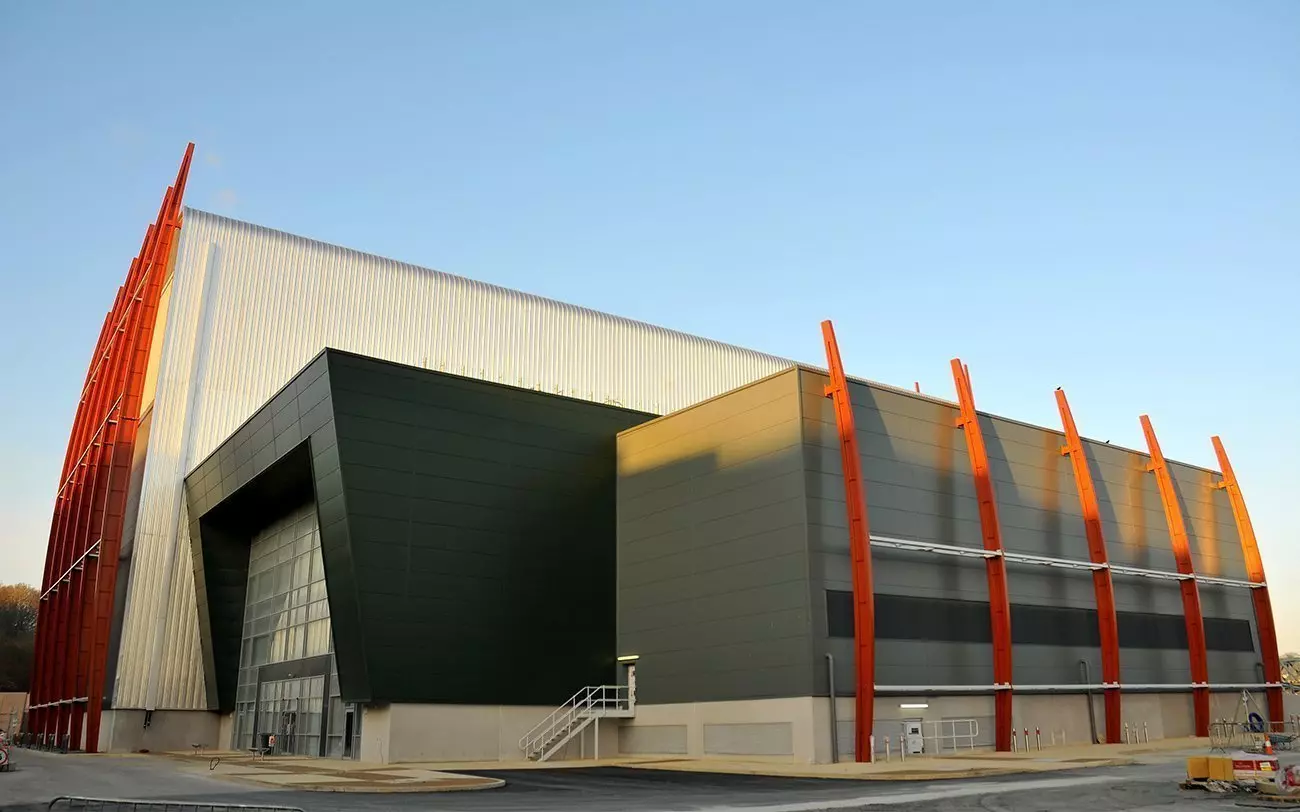
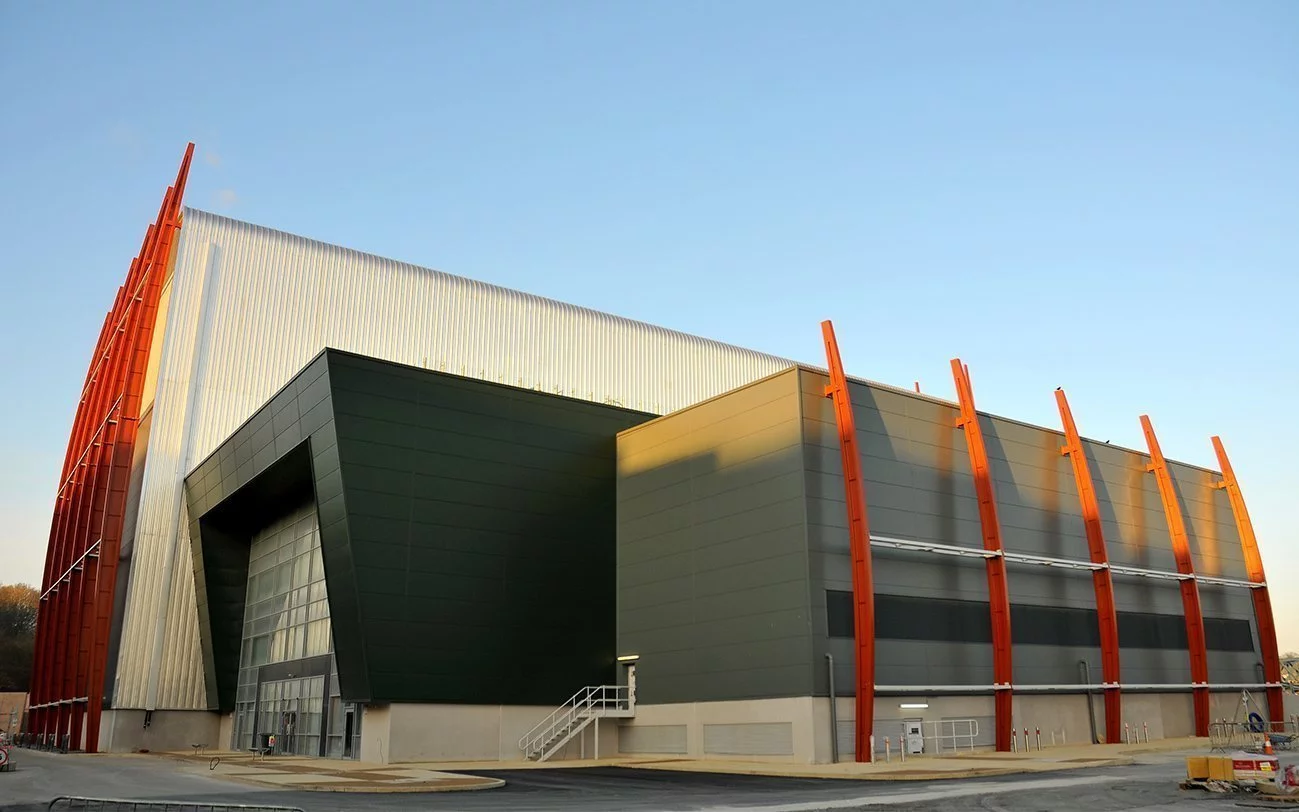
The proposed design has been developed to be both a high-quality and high-efficiency modern and functional EfW CHP facility to manage waste and to produce locally usable electricity and heat as part of a cutting-edge development in a dockyard that has been at the forefront of technological innovation for over two hundred years. The design has evolved, following feedback from our public consultation and various bodies such as the South West Design Review Panel.

We have reduced its size from the initial design, so that it is less prominent. However, as a large building it cannot be entirely absorbed into its setting, so has been designed to form a local landmark – a flagship feature even. The new development is well designed to respect the character, identity and context of Plymouth's historic townscape and landscape and in particular Plymouth's unique waterfront. The appearance of the building has been made more elegant by the addition of "ribs" to the taller elements of the building; and the Air Cooled Condensers: a lighting scheme has been developed for the evening to make the building a major architectural element in the Cityscape without intruding on local residents.

How is the stack height determined?

The height of any industrial exhaust stack is determined by a number of factors. This includes the type of emissions, temperature, composition and speed of the flue gas leaving the stack, the prevailing winds, the profile of the surrounding area, etc. The first task in calculating the height is to minimise any impact of the plant on the environment in terms of air quality or noise.

The optimum height of the stack was determined following the strict criteria of the Waste Incineration Directive. MVV's calculations show a height of 95 metres as being the optimum. The ground level of the site is 9 metres above sea level and local high ground levels are between 60 metres and 80 metres above sea level. The top of the stack will therefore be higher than the surrounding areas.

Could the plant be made smaller?

The size of the building has been designed to accommodate the equipment it contains, such as the tipping hall, the grate and boiler and the gas clean-up processes. The plant cannot be reduced in overall size as the building has been designed to fit around the various processes, and to deal with a certain volume of waste each year. Building part of the plant underground is not a viable option due to the groundwater level.

How long will it take to build?

Around two and a half years, but actual construction will not start until MVV gets planning permission. Subject to obtaining the necessary consents, the plant will be commissioned in 2014.

How many jobs will there be during and after construction?

There will be up to 300 jobs with an average of 159 people working on site daily during construction and 33 permanent jobs during operation. Additionally, there would also be some 70 indirect jobs to do with maintenance of the plant, which will be subcontracted. MVV aims to recruit locally, but due to EU competition law cannot specifically reserve jobs for local people

How noisy will it be?

There will be little external noise from the operation of the plant. Mostly, operational noise will not be heard above the general background noise. As part of the planning application determination process, noise surveys have been undertaken to ensure that MVV complies with Plymouth City Council's guidelines on noise.

Will there be odours?

No. The plant does not smell outside as waste will be unloaded inside the building into a bunker. This area is kept at a slightly negative pressure, so that any smells are contained inside the building. Combustion air is drawn from this area, so that any odours are sucked into the furnace and effectively burned. The flue gas from the stack is odourless.

If it operates 24/7, won't light or traffic disturb local residents?

Although the plant will operate 24 hours a day, the waste lorries will not deliver 24 hours a day. Delivery times will be from 8:00 am to 7:00 pm and will be agreed with the planning authority, taking into account existing traffic flows, school hours, etc. External lighting will also be designed to be unobtrusive to neighbouring properties.

Energy

How much electricity will it produce?

The plant will generate up to 22.5 megawatts net, depending on steam demand from the Naval Base. The electrical energy generated equals the peak load of around 37,000 households.

How much heat will it produce?

The plant will produce steam with an energy output to the Naval Base of up to 23.3 megawatts net. This equals the peak load of approximately 1,200 households.

How will the heat be used and by whom?

The heat will be used to heat the Dockyard and Naval Base. Potentially, in the future, heat could be provided to district heating systems in Plymouth if they are developed by or on behalf of the Council. MVV is looking into supplying heat to the surrounding areas.

Waste/recycling

How much waste will it deal with?

The plant is designed to treat up to 265,000 tonnes per year of waste although it is expected that 245,000 tonnes per year will be processed after recycling has taken place. The actual amount will be determined by the energy content of the waste; the lower the energy content, the more can be treated.

Where will the waste come from?

The waste will come from the three councils that form the South West Devon Waste Partnership: Plymouth City Council, Devon County Council and Torbay Council plus some commercial and industrial waste from local businesses who will also need a new waste disposal solution as an alternative to landfill. For more information on SWDWP see http://www.swdwp.co.uk

Can the waste be delivered by rail or ship?

Waste could potentially be delivered by rail and sea and MVV has a lot of experience in Germany in these waste transport methods. However, they would require train or ship loading/unloading facilities at both ends of the journey and these do not exist at present. If an opportunity or need arises in the future, MVV and SWDWP will discuss how this might be developed. However, transport by train would involve reopening the sidings through Blackies Wood which might present issues such as noise to the nearby houses so this would have to be fully investigated. Transport by ship might actually involve many more heavy goods journeys through the city because the Naval Base being a controlled military establishment cannot be used for waste management operations.

Doesn't EfW discourage recycling?

No, quite the opposite. Evidence from Europe shows that those countries with the highest recycling rates also use EfW to dispose of residual waste. EfW complements recycling. It does not prevent waste being recycled because it treats the waste left over after recycling has taken place, putting it to productive use and saving it from being landfilled.

Shouldn't we be recycling plastics instead of burning them?

The British Plastics Federation states that used plastics are a valuable resource and can be recycled up to six times, at which point, when it is no longer economic or environmentally friendly to recycle them, they should have their energy recovered through EfW and provide much needed sustainable power. SWDWP will therefore continue to promote and be responsible for recycling household waste in preference to creating energy as this is more sustainable.

Will any metals be recycled from the waste?

Yes. The bottom ash is a residue from the incineration process and contains some ferrous and non-ferrous metals. Sorting and recycling these metals from the ash will be part of the treatment process.

Residues of the EfW process

What kind of residues will arise from the incineration?

Basically, there are two kinds of residues: Incinerator Bottom Ash (IBA) and fly ash (or Air Pollution Control Residues). Neither of these is classified as toxic, although fly ash is classified as hazardous due to being alkaline.

What will happen to the IBA? How will it be transported and where?

IBA is left over on the grate after all the combustibles have burnt out. It mainly consists of ash and non-combustible material like metals, glass and debris. It drops into a cooling bath and is then collected for further processing.

IBA will then be transported off site in covered lorries to a recycling plant, possibly in Buckfastleigh. There, metals will be removed for recycling and the residues will be recycled for use as a secondary aggregate, for example in road building or lightweight blocks.

How much IBA will be produced?

The IBA will amount to approximately 23 per cent of the total weight of waste treated, ie about 57,000 tonnes per annum.

What will happen to the Air Pollution Control Residues?

Fly ash, or Air Pollution Control (APC) Residues, is collected in the filters of the multi-stage Air Pollution Treatment. It consists of small particles from the waste itself as well as the absorbing material added to the flue gas in order to remove harmful substances. It will be transported off-site in special sealed containers in the same way that cement is and disposed of in the north of England under contract with a specialist contractor. Fly ash is classified as hazardous because it is alkaline (like cement).

How much fly ash will be produced?

The APC residues amount to around 3.5 per cent by weight of the total waste treated, i.e. about 8,500 tonnes per annum.

Health/safety

How safe is EfW?

The Health Protection Agency is an independent statutory government organisation whose role is to provide expert advice on public health matters to Government, stakeholders and the public. It reviewed the latest scientific evidence on the health effects of modern incinerators and concluded in its position paper dated February 2010 that any potential damage from modern, well run and regulated incinerators is likely to be so small that it would be undetectable. For further information click here.

In 2004, DEFRA published a report, "Review of Environmental and Health Effects of Waste Management: Municipal Solid Waste and Similar Wastes". The report concluded that risks to human health from incineration are small in comparison with other known risks and that there was no evidence for a link between the incidence of disease and the current generation of EfW plants. Further, the role of incineration with energy recovery was acknowledged as a sustainable waste management option. For further information click here.

How are the gases from incineration treated?

Emissions generated from the combustion process go through a three-stage clean-up that includes selective non-catalytic reduction, the injection of dry bicarbonate and activated carbon and a fabric filter. The emissions will meet stringent regulatory standards before being released to the atmosphere. EfW is therefore a well-managed process that has an overall positive benefit in terms of carbon emissions and climate change.

Has there been any research into the long term effects of incinerations?

EfW has sometimes been criticised as being harmful, especially with regard to emissions, although independent scientific studies have shown that these allegations are not true.

Concerns about the health of people living near an EfW facility have been addressed by the UK Committee on Carcinogenicity of Chemicals in Food, Consumer Products & the Environment. In its March 2000 report (prior to even tighter emission standards being introduced), it said: ‘The Committee is reassured that any potential risk of cancer due to residency (for periods in excess of 10 years) near to municipal solid waste incinerators was exceedingly low and probably not measurable by the most modern epidemiological techniques. The Committee agreed that, at the present time, there was no need for any further epidemiological investigations of cancer incidence near municipal solid waste incinerators.’ In March 2009, in the light of more recent research, the Committee concluded that there was no need to change its earlier advice (For further information click here, page 73).

Dieter Schrenk, Professor of Toxicology at the University of Kaiserslautern, Germany and a World Health Organisation adviser, critically reviewed many peer-reviewed studies and two others by the British Society of Ecological Medicine and Greenpeace on the issue of exposure, health effects and municipal waste incinerators in 2006. He concluded: "... modern municipal waste incinerators can be regarded as safe facilities which have an imperceptible impact on the environmental and health situation in their neighbourhood" ("Health effects of municipal waste incinerators – a literature survey", Dieter Schrenk, MD PhD, Professor of Toxicology, University of Kaiserslautern, Germany, 2006).

How will the emissions be monitored and by whom?

MVV will monitor the majority of emissions from the facility continuously. Other trace emissions must be monitored by sampling; this will be carried out at regular intervals as required by the Environment Agency and with its agreement. The emissions data will be logged and stored and reported to the Environment Agency. It will also be available on a weekly basis on MVV's website.

The Environment Agency acts as an independent monitor of the plant’s outputs. If limits were breached, it has the power to shut down the plant and impose fines accordingly.

What impacts will the plant have on the environment?

EfW replaces energy that is in part generated from fossil fuels and so reduces the UK's dependence on landfill, thereby cutting methane (CH4) emissions from landfill and carbon dioxide (CO2) emissions from conventional energy generation. Currently 70% of the UK’s electricity is generated by burning fossil fuels. In the UK, landfill accounts for 41% of methane production, which is 23 times more harmful as a greenhouse gas than CO2.

Both conventional power stations and EfW facilities generate carbon dioxide emissions in the production of power. However, EfW facilities result in a lower overall greenhouse gas impact than conventional coal and gas power stations. About 50 per cent of the waste used in EfW facilities is of an organic origin – therefore reducing the lifecycle emission of CO2 even further.

Does the EfW plant have any connection with the proposal to dismantle redundant nuclear submarines in the dockyard?

No.

Will the facility burn radioactive waste from the dockyard?

No. We will not incinerate radioactive material from the dockyard within the plant. This is also specified in the contract with SWDWP.

Is EfW a major source of dioxins?

No. In the past, EfW plants were a significant source of dioxins, but following reductions in emission limits in 1995 and 2000, EfW now accounts for less than 1% of the overall dioxin emissions to the air in the UK. In fact, dioxin emissions from EfW in the UK have changed dramatically, with a 99.8% reduction in dioxin emissions per tonne of waste since 1990. This is due to highly sophisticated flue gas cleaning systems, which will also be used in the proposed plant in Plymouth (For further information click here).

The findings above are also supported by evidence from countries that have comparable emissions regulations in place, but also have a much higher number of EfW plants compared to the UK. For example, the capacity of E fW plants in Germany increased by 40% between 1990 and 2005 (2005: 21 million tonnes capacity) but dioxin emissions decreased by 99.5% during that time. The contribution of EfW plants to the total dioxin emissions in Germany was 1% in 2004 (compared with 4% from traffic, 26% from residential heating and small furnaces, 8% from power plants and 57% from metallurgical processes (For further information click here)).

Is EfW a major source of particulates?

No. EfW accounts for a very small part (0.02%) of total particulate emissions in the UK annually. According to the Health Protection Agency, by comparison, industry and traffic account for about 40% of particulate emissions (For further information click here).

EfW technology

Isn't incineration outdated technology?

Uncontrolled incineration of waste was old technology. Modern EfW plants use the latest technology to ensure both that heat and steam can be gainfully used from the process, and that emissions are cleaned before release to the atmosphere. There is no comparison between modern, well-run and monitored EfW plants and old incinerators. Modern biomass fired power plants also use the same modern technology.

Why didn't MVV consider alternatives, such as MBT/AD/autoclave/plasma gasification/ pyrolysis?

There are a number of technologies available that treat various waste streams. MVV monitors alternative technologies continually. However, none of them provides the solution for treating the complete range of residual solid waste safely, economically and in an environmentally friendly way.

  • Mechanical biological treatment (MBT) has yet to be proven for large quantities of mixed household waste. There is no adequately safe and economically feasible technology to be had for the foreseeable future.
  • Anaerobic digestion (AD) is suitable for organic waste such as kitchen refuse only. It cannot be used to treat all the residual waste that SWDWP produces.
  • Plasma gasification is still in its technological infancy, meaning there is no reliable, long-term operational information available on which to base sound decisions. A recent independent worldwide review of plasma gasification plants identified that only one company had technology that had been proven commercially for handling the complex mix of municipal solid waste, but that there had been "significant technical, operational and environmental issues making it a cause for concern".

How many EfW plants are currently in operation?

There are more than 430 EfW plants operating in the EU alone, with 20 in the UK and more planned.

Traffic/transport

How many HGVs will be driving to and from the plant once it has commenced operations?

The anticipated traffic numbers have been finalised as part of an extensive traffic modelling exercise which analyses traffic by type and by time of day. The total number of deliveries is in the order of 132 HGVs (or 264 two-way movements) per day, which includes the vehicles delivering the waste, removing the ash and servicing the plant.

Which route will those HGVs take?

The A38 is the main road providing a clear route for transporting waste from Devon and Torbay. However, actual routes to the plant have not yet been finalised. Much of the waste is currently being transported via the A38 to a landfill site in Cornwall. Therefore, overall waste miles will be reduced through use of this facility.

What hours will HGVs operate?

The hours of delivering waste will be discussed with the Highways Authority, and these discussions will consider local conditions, such as school hours and Dockyard shift times. At present it is proposed to deliver waste between 8:00 in the morning and 7:00 in the evening and between more restricted times at week-ends. Waste will not be delivered throughout the night.

         Back        Top          Print